
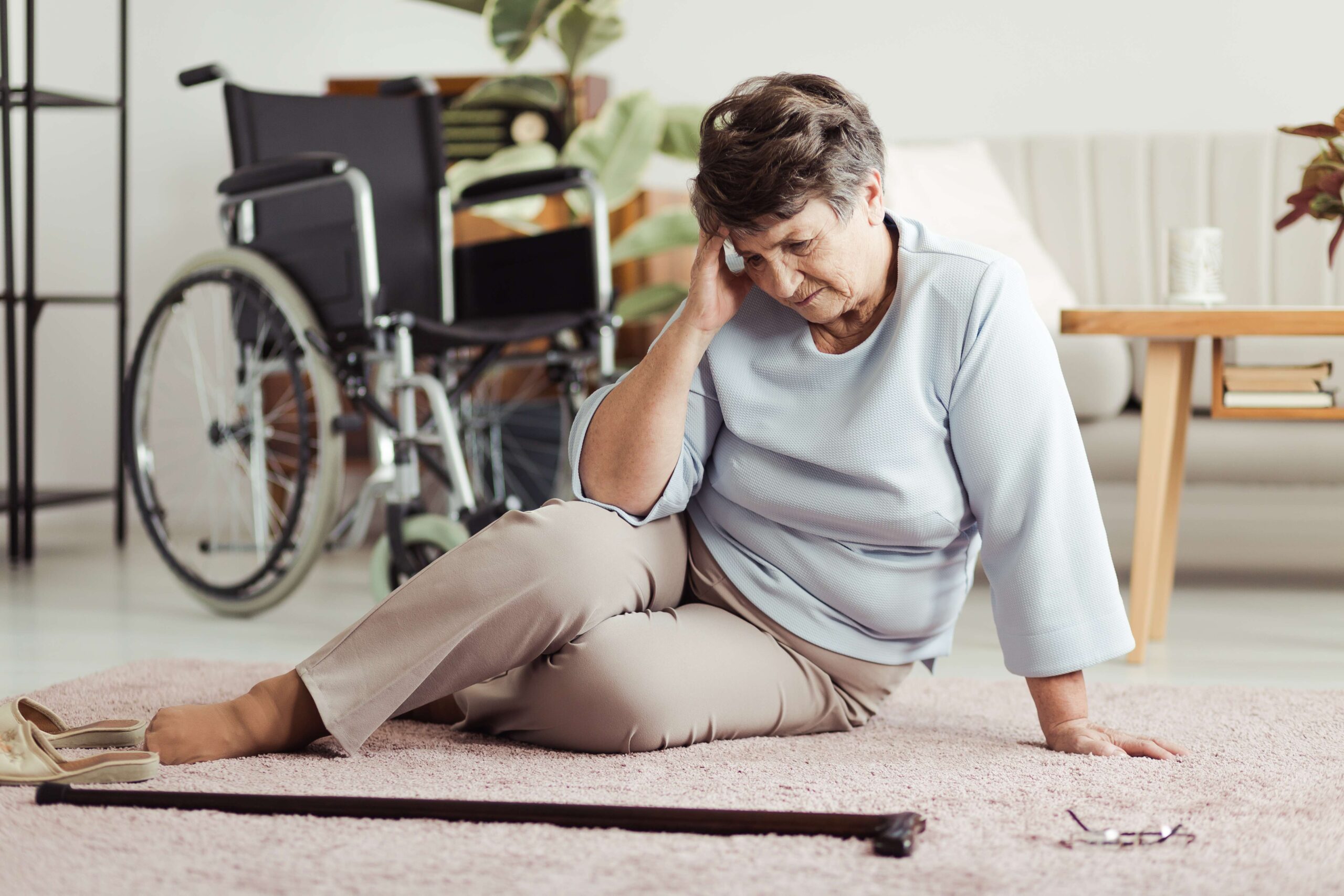
Why Nursing Home Falls Happen and Who Can Be Responsible in Georgia
Most preventable falls trace back to a short list of causes: understaffed shifts, poor supervision, wet or cluttered floors, broken bed rails or call buttons, and medication side effects that leave a resident unsteady.
Georgia premises liability law holds property owners responsible for hazardous conditions, and nursing homes bear an additional duty to protect residents from foreseeable harm.
When understaffing, inadequate training, or ignored safety protocols led to a fall, the facility itself, and sometimes an individual staff member or the ownership group, can be held legally responsible.
Common Fall Injuries Suffered by Residents in Atlanta Nursing Homes
Falls among elderly residents often cause more than bruises.
Common injuries include hip and pelvic fractures that require surgery and lengthy rehabilitation, traumatic brain injuries from head impacts, spinal cord injuries, wrist and arm fractures from attempts to break a fall, and deep lacerations requiring stitches.
Any of these can trigger a rapid decline in a resident’s overall health. In the most tragic cases, a fall leads to a death, which is why our Atlanta wrongful death attorneys handle those claims separately to make sure grieving families get full accountability.
How to Determine If a Fall at an Atlanta Facility Was Preventable
A fall is not automatic proof of neglect, but it often points to one. If staff knew a resident had a history of falling, used a wheelchair or walker, or took medication that caused dizziness, and failed to adjust the care plan or provide adequate supervision, the fall was likely preventable.
We can start by pulling the resident’s care plan, staffing logs for the shift in question, and any prior incident reports, then interview witnesses and consult medical professionals to determine how the fall led to the injury. A missing or outdated fall-risk assessment is often the clearest red flag.
Georgia Regulations on Fall Prevention in Long-Term Care Settings
Georgia’s Department of Community Health licenses 357 long-term care facilities statewide, caring for more than 40,000 residents, and a large share of them are located in Fulton, Cobb, and DeKalb counties. Facilities are required to complete fall-risk assessments, maintain adequate staffing levels, and correct hazards identified during state inspections. When a facility ignores these standards, the resulting fall often becomes the basis of a negligence claim.
Compensation Available to Atlanta Families After a Nursing Home Slip and Fall Injury
Depending on the severity of the injury and how clearly negligence can be shown, families may recover medical expenses, the cost of future care, pain and suffering, and, in the most severe cases, wrongful death damages.
Georgia generally allows two years from the date of injury to file a claim, so it is worth talking to someone before evidence disappears. We work on a contingency basis, so you owe nothing unless we recover for you.
Why Atlanta Families Call The Roth Firm For Their Elder’s Injuries
Local Court Know-How
Where a claim is filed depends on which county the facility is located in. A facility inside Atlanta proper typically falls under Fulton County State Court, one near Vinings, Smyrna, or Marietta falls under Cobb County State Court, and a facility around Decatur or Druid Hills falls under DeKalb County State Court, each with its own filing pace.
Fast, Clear Communication
When a fall sends someone to Grady Memorial, Emory Midtown, Piedmont Atlanta, or Wellstar Cobb, families are often juggling the hospital, the facility, and an insurance adjuster in the same week, so we answer calls and explain things in plain language at every step. Our fee comes only from a recovery, never out of your pocket.
Here’s How to Get Started
- Call or message us with what happened, including the facility name and approximate date
- Share any records you already have, such as incident reports or discharge paperwork
- Meet with our team, in person or by phone, to walk through your options
Our Law Office
We represent families across Vinings, Buckhead, Sandy Springs, Smyrna, Marietta, Decatur, and Midtown, and can typically arrange a hospital or home visit if a trip to our office is not practical. From I-75 or I-285, exit toward Cumberland and follow signs for Powers Ferry Road; our office sits just off Cumberland Mall and Truist Park, with on-site visitor parking.
You can find our Atlanta law office at 6120 Powers Ferry Rd NW Suite 630, Atlanta, GA 30339.
Get Legal Help With Your Elder’s Nursing Home Slip and Fall
If your family is dealing with the aftermath of a nursing home fall in Atlanta, you do not have to figure out the next step alone.
Contact our Atlanta nursing home injury attorneys today for a free, no-pressure conversation about what happened and what options your family has.
Questions Atlanta Families Ask About Nursing Home Slip and Falls
Many families also find it useful to compare nursing home inspection reports through Medicare’s public database before or after choosing a facility.
How do I know if the fall was preventable?
If staff knew about a fall risk, a mobility issue, or a hazard like a wet floor and did not act, the fall was likely preventable. Care plans, staffing records, and prior incident reports usually reveal whether reasonable precautions were skipped.
What if the facility blames my loved one for falling?
Facilities sometimes shift blame to avoid responsibility, but that does not end the inquiry. If staff knew the resident was a fall risk and failed to provide adequate supervision or equipment, the facility can still be held accountable.
Should I file a state complaint or call a lawyer first?
You can do both at once. A complaint with the state can trigger an inspection, while a lawyer pursues compensation directly, and the two often support each other.
Will my case have to go to trial?
Most nursing home fall cases settle once liability and damages are clearly documented, though we prepare every case as if it will go to trial, which tends to strengthen negotiations.
How fast should I reach out after a fall?
As soon as you reasonably can. Incident reports, camera footage, and witness memories fade quickly, so early outreach gives us the best chance to preserve what matters.


