

The Short Version for Savannah Drivers
- The driver in the back is usually at fault, but not always.
- Sharing the blame lowers your payment, and too large a share can wipe it out entirely.
- Whiplash symptoms can show up a day or more later, so get checked even if you feel fine.
- Skip the recorded statement to the other driver’s insurer until you get advice.
- Georgia’s filing deadline is strict, and business camera footage can be recorded over, so ask for it quickly.
Who’s at Fault in a Chatham County Rear-End Crash
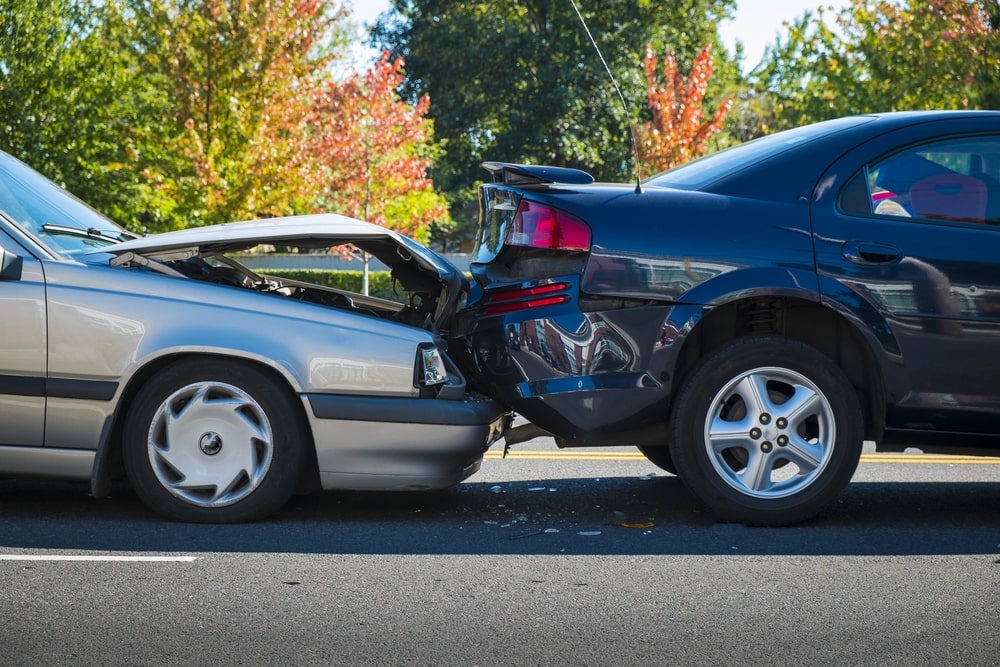
In most cases, the evidence points to the driver in the back. Georgia law requires drivers to keep a reasonable, safe following distance based on speed, traffic, and road conditions. A driver who couldn’t stop in time was usually too close, going too fast, or looking at a phone. Georgia’s hands-free driving law bans holding or supporting a phone while driving, so phone records can be strong proof. We also pull the Savannah or Chatham County police crash report and nearby camera footage.
Exceptions: When the Lead Driver Shares the Blame
Sometimes the car in front played a part:
- Brake checking, or stopping hard for no reason
- Cutting in and braking right after a lane change
- Backing up into traffic in tight downtown parking areas
- Broken brake lights that gave no warning
Georgia uses a comparative fault rule, which means blame gets split between drivers. Your payment shrinks by your share of the blame, and under Georgia’s comparative fault law, carrying too much of it can bar you from recovering anything. When adjusters try to shift blame onto you, we answer with proof.
Rear-End Pileups on I-16 and in Downtown Savannah’s Squares
I-16 carries heavy truck traffic to and from the Port of Savannah. The state’s I-16 and I-95 interchange improvement projects include widening I-16 to three lanes each way between I-95 and I-516 and adding ramp meters on the SR 307/Dean Forest Road and Chatham Parkway on-ramps. Even so, sudden backups still cause chain-reaction crashes. When a tractor-trailer is involved, our truck accident lawyers also go after the trucking company’s records.
Downtown, drivers circling Chippewa, Johnson, and Madison Squares brake for walkers and tight turns. One distracted driver on Bull Street can start a three-car chain. We map the order of impacts so the right drivers pay.
How Insurance Adjusters Undervalue Whiplash and Soft Tissue Claims
Soft tissue injuries, such as whiplash, damage muscles, tendons, and ligaments, and they rarely show up on an X-ray. Adjusters use that by:
- Treating light car damage as proof of light injury
- Pointing to a gap in treatment, like waiting a week to see a doctor
- Blaming an old back or neck problem
- Making a fast, low offer before symptoms fully appear
We push back with doctors’ notes, MRI results, and therapy records. Georgia law also lets you recover when a crash worsens an old injury.
What Can a Savannah Rear-End Accident Lawyer Recover for You?
Medical bills, lost pay, and other out-of-pocket costs
These are the money losses you can show with bills, receipts, and pay stubs:
- Ambulance and ER care at Memorial Health or St. Joseph’s/Candler
- X-rays, MRIs, and specialist visits
- Physical therapy, chiropractic care, injections, and prescriptions
- Future treatment your doctors expect you to need
- Missed shifts, used sick days, and lower future earnings
- Car repairs or replacement value, plus a rental car
Pain and disruption to your daily life
You can also be paid for physical pain, lost sleep, fear of driving, and missing things you love, like an evening walk in Forsyth Park.
Can you get punitive damages?
Usually not. Punitive damages are extra money meant to punish a driver, not to repay your losses, and they are an exception to the normal rule. Georgia’s punitive damages law reserves them for conduct far worse than an ordinary mistake, and it requires a higher level of proof than a typical injury claim. Careless driving alone is not enough. Drunk or drugged driving is a common basis, and Georgia’s usual limit on punitive damages does not apply in those cases. We will tell you honestly whether your case may qualify.
What Happens When You Call Us?
- A free, private call. Tell us what happened and share any photos or insurance letters.
- We build the case. We get the crash report, save footage, and collect your medical records.
- We handle the insurers. We handle every call and offer. If they will not pay fairly, we are ready to file a lawsuit and go to court.
Our founding attorney once defended insurance companies, so we know their playbook. The Roth Firm works on a contingency fee, meaning we take a percentage of what we recover. If we recover nothing, you owe no attorney fee.
Savannah Rear-End Crash Questions, Answered
Is a “minor” rear-end crash worth a free review?
Often, yes. Neck and back pain can build over days, and early offers arrive before you know your full costs. A review shows what your claim may be worth before you sign.
What if the other driver says I stopped suddenly?
It is a common excuse. A sudden stop does not automatically excuse the driver behind you, because a safe following distance is meant to leave room for one. Camera footage, witnesses, and the crash report show what really happened.
My crash happened in Pooler, Garden City, or on Wilmington Island. Can you help?
Yes. We handle claims across Chatham County, including the Historic District, Midtown, Southside, and Ardsley Park. We meet by phone, video, at home, or in the hospital.
Who pays my medical bills right after the crash?
The at-fault driver’s insurer usually pays in the end, but that takes time. Your medical payments coverage or health insurance can bridge the gap.
What if my crash was more than a rear-end hit?
Many wrecks mix rear-end and side impacts. Our car accident attorneys handle all types of collisions across Savannah and Chatham County.
Ready to Talk?
Office: 6120 Powers Ferry Road NW, Suite 630, Atlanta, GA 30339
Phone: 404-640-5761, 24/7
The driver behind you made the mistake. You should not pay for it. Call today for your free review.

