
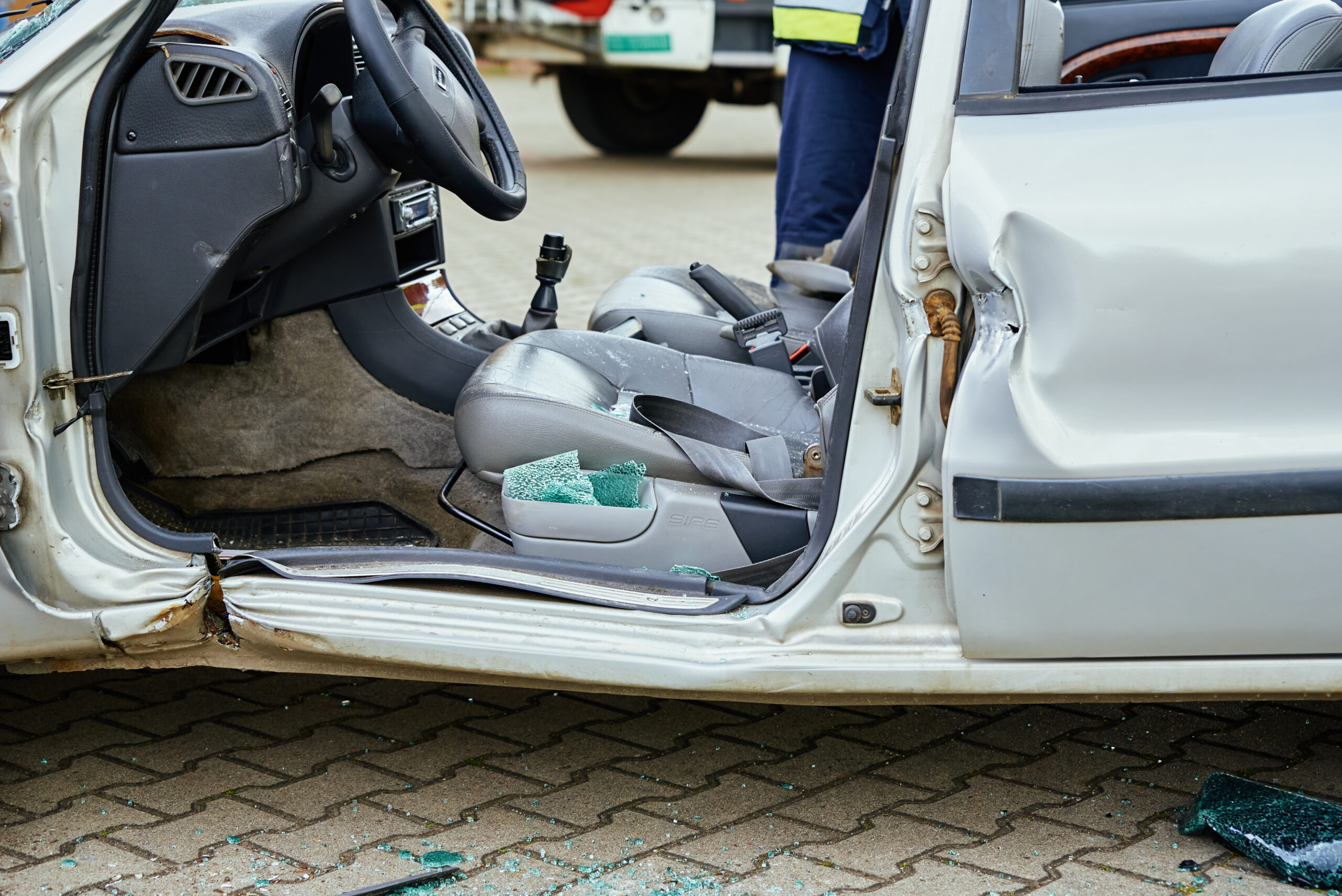
Airbag failure claims in Georgia are entirely distinct from ordinary car accident cases.
They are product liability actions governed by complex technical standards, specific corporate defendants, and an exceptionally tight evidentiary timeline.
If your vehicle’s airbag failed to deploy, deployed late, or forcefully discharged metal shrapnel during a collision, taking immediate steps to preserve the vehicle and other evidence is paramount.
Partnering with an experienced automotive product liability attorney is the most critical step you can take before essential electronic and physical evidence disappears forever.
Understanding Product Liability Under Georgia Law
When an automotive safety feature fails, the legal framework shifts from basic driver negligence to strict product liability.
Under Georgia Code section 51-1-11, a manufacturer is strictly liable if their product was not “merchantable and reasonably suited to the use intended, and its condition when sold is the proximate cause of the injury sustained”.
Unlike a traditional personal injury claim, you do not need to prove that the manufacturer was careless or reckless.
You must prove that the airbag system was defective and that the defect caused your injuries.
An airbag injury attorney can generally pursue damages for:
- Product Liability: Seeking damages directly for a design or manufacturing defect under Georgia Code section 51-1-11.
- Negligence: Holding corporations accountable for failures in systemic product design, real-world crash testing, or factory quality control.
- Breach of Implied Warranty: Establishing that the safety restraint system failed to fulfill its basic, fundamental purpose of protecting occupants during an impact.
What Constitutes a Defective Airbag?
An airbag defect is not limited to an airbag that remains completely flat during a major wreck. Product liability claims can involve several types of system failures:
- Non-Deployment: The system fails to trigger despite a severe, qualifying impact.
- Late Deployment: The airbag inflates milliseconds too late, striking the occupant while they are already moving forward, often worsening head and neck trauma.
- Inadvertent Deployment: The airbag deploys spontaneously during normal driving conditions, causing severe friction burns, fractures, or secondary collisions.
- Aggressive Inflation or Shrapnel Discharge: The inflator housing ruptures violently upon deployment. This specific defect was central to the historic NHTSA Takata Airbag Recall, which affected over 67 million inflators and resulted in numerous U.S. fatalities, as well as ongoing federal investigations into NHTSA ARC Automotive Airbag Inflators.
5 Critical Steps to Preserve Evidence After an Airbag Failure
- Do Not Repair, Alter, or Release the Vehicle
The airbag module, wiring harness, inflator canister, and sensor arrays are the physical core of your product liability claim.
If the insurance carrier declares the vehicle a total loss, issue an immediate written directive stating that the vehicle must not be repaired, sold at salvage auction, or crushed pending a formal forensic legal evaluation.
- Take Comprehensive Photographic Evidence
Document the entire interior of the car.
Photograph the non-deployed steering wheel or dashboard, the visible damage to the vehicle’s exterior crumple zones, and any point of physical impact inside the cabin where your body struck the interior.
- Seek Immediate, Specialized Medical Care
Airbag non-deployments, during a collision, can cause severe traumatic brain injuries (TBIs), facial fractures, internal bleeding, and spinal trauma.
Ensure that emergency room physicians and radiologists explicitly document the exact nature of your impact injuries, which directly links your trauma to the safety system’s failure.
- Obtain Official Police Accident Documentation
Secure a certified copy of the police accident report for the collision.
Law enforcement documentation regarding estimated collision speeds, vehicle positioning, and initial impact vectors can provide vital corroboration for your case.
- Retain Legal Counsel Before Providing Statements
Automotive manufacturers deploy dedicated defect-response teams to investigate serious component failures.
Do not provide a recorded statement to vehicle inspectors or any insurance adjusters until you have secured a lawyer to safeguard your rights.
The Crucial Role of the Airbag Control Module (ACM)
Proving that a crash met the specific physical threshold required to trigger an airbag requires extracting data from the vehicle’s technical data, specifically from the Airbag Control Module (ACM), if available.
Under federal regulations outlined in the Electronic Code of Federal Regulations 49 C.F.R. Part 563, modern vehicle EDRs can capture a precise data snapshot in the brief seconds immediately preceding and during a crash.
A qualified legal team retains certified forensic analysts to download this data using specialized crash data retrieval tools.
If the vehicle’s electrical system is powered on repeatedly or the vehicle is driven after an accident, this critical data can be permanently overwritten or corrupted. Immediate vehicle preservation is entirely non-negotiable.
Building a Defective Airbag Case
Establishing a clear manufacturing or design defect requires a multi-layered evidentiary approach that links technical data with corporate accountability:
- Federal Regulatory Databases: Searching public consumer complaint registries, active defect investigations, and historical recalls managed by the National Highway Traffic Safety Administration (NHTSA), can help establish whether the manufacturer had prior notice of systemic component failures.
- Corporate Discovery: Subpoenaing internal manufacturing design blueprints, factory testing logs, and corporate communications can reveal whether the manufacturer knew about the risks before the vehicle left the factory and what those risks may be.
Get Legal Help For Your Airbag Injury in Georgia
If you or a loved one suffered severe injuries due to a faulty or non-deploying airbag system, you do not have to confront corporate legal teams alone.
Contact The Roth Firm today for a completely free, confidential case evaluation; or call our team at: (678) 748-3803.
We bring decades of dedicated investigative experience, deep technical resources, and unwavering advocacy to complex automotive defect litigation across Georgia, including Fayetteville, Marietta, and Atlanta.
Legal Disclaimer
The information provided in this blog post is intended solely for general informational and educational purposes. It does not constitute formal legal advice, nor does it establish an attorney-client relationship between the reader and The Roth Firm, LLC.