
A right-of-way accident can change your whole day in seconds. These crashes happen fast, and knowing who was supposed to move first becomes the main factor in proving fault, including failure to yield.
Right-of-way rules shape how insurance companies assess responsibility and weigh evidence. The Roth Firm has handled many of these cases, and this guide uses verified federal safety data and real cases
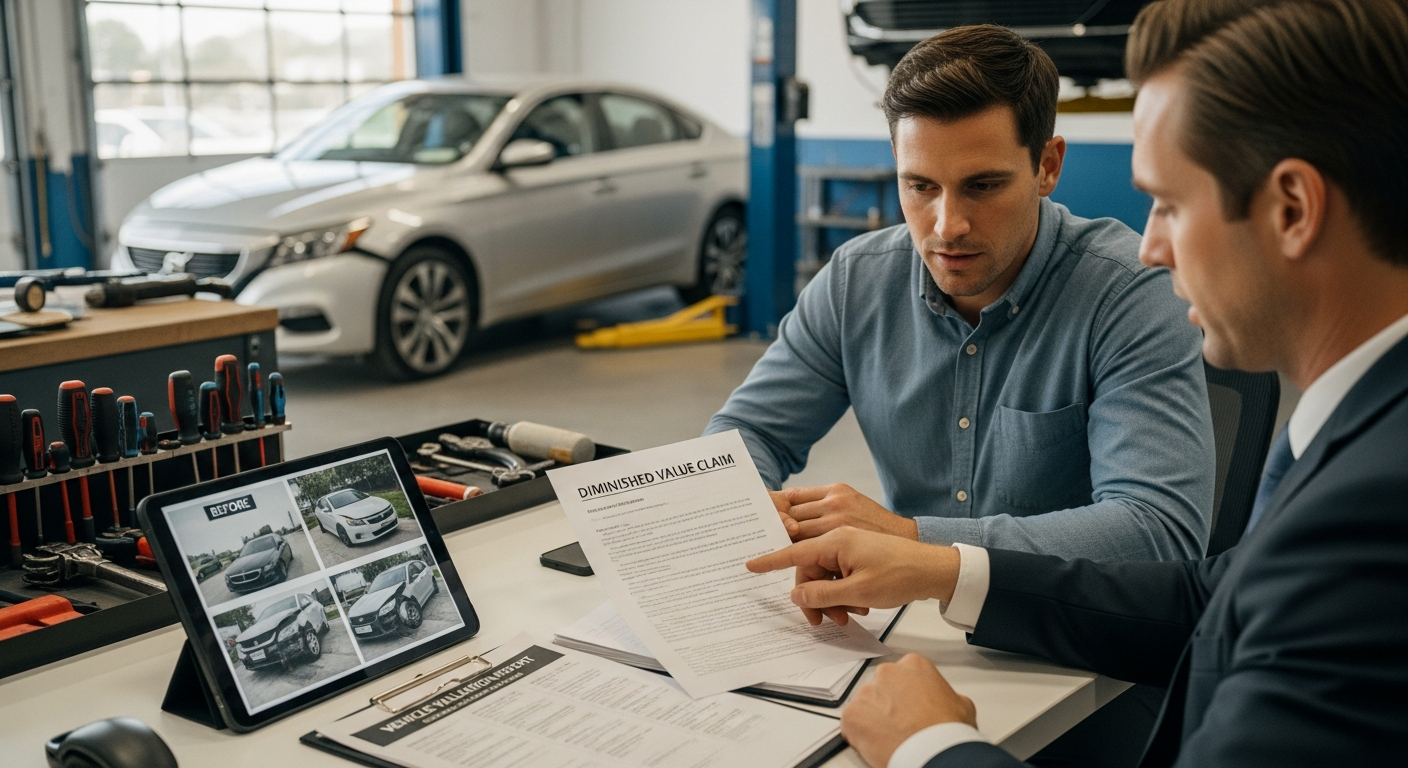
A diminished value claim helps you recover the loss in your car’s worth after an accident, even when repairs are completed. Many drivers do not realize their vehicle loses value simply because the crash appears on its record.
The Roth Firm has guided many clients through the process of proving value loss and challenging low insurance offers. This guide blends practical experience with verified research from trusted sources, including the NAIC, the FTC, and the Insurance Information Institute.
You can explore related services on our practice page.
Car Accident Diminished Value: Key Takeaways
- Understand how accident history lowers resale and trade-in value.
- Gather evidence that shows the difference between pre-accident and post-repair value.
- Take action quickly when insurers dispute or undervalue a diminished value claim.
What is a diminished value claim?
A diminished value claim seeks compensation for the difference between what your car was worth before a crash and what it is worth after repairs. Even if repairs look perfect, a recorded accident lowers the vehicle’s market appeal. Buyers often prefer cars with clean histories, and this reduced demand creates measurable loss. Industry valuation tools show how accident history affects pricing.
There are three types of diminished value:
(1) Immediate diminished value is the loss seen right after the crash.
(2) Inherent diminished value is the most common and reflects long-term loss because the vehicle now carries an accident history.
(3) Repair-related diminished value happens when repairs leave behind imperfections that affect performance or appearance.
Laws on diminished value recovery
Your ability to recover diminished value depends on your state’s law and whether you are filing a third-party or first-party claim. Many states allow third-party diminished value recovery when another driver is at fault. First-party recovery is more limited and depends on your own policy wording.
The National Association of Insurance Commissioners explains that insurers must evaluate claims fairly and respond within required timelines.
The Federal Trade Commission adds that sellers often need to disclose major repairs or damage history during resale. Their consumer information helps show why accident history affects pricing.
How insurance companies calculate vehicle value loss
Many insurers use the 17c formula to estimate diminished value. The formula starts with the vehicle’s pre-accident value, then applies a damage multiplier and mileage adjustment. While simple, it often undervalues the actual loss.
The Insurance Information Institute notes that post-accident value loss varies based on the severity of repairs, vehicle age, and market conditions. Their guidance confirms that insurers consider these factors when reviewing diminished value insurance claim requests. Because insurer formulas may not reflect real market loss, many drivers turn to independent appraisals.
Independent appraisers use dealer quotes, resale data, and market comparisons to calculate more accurate value loss. These reports often strengthen a diminished value claim and help challenge low offers.
Steps to file a diminished value claim
- Start by collecting documentation. Gather repair records, photos, mileage details and your vehicle’s pre-accident value. A post-repair inspection or appraisal provides a reliable estimate of the value loss.
- Submit your diminished value claim to the at-fault driver’s insurer. Include all evidence that shows the difference between the pre-accident and post-repair values. Clear communication helps speed up the review process.
- If the insurer disputes your claim, delays responding, or offers a low settlement, you can challenge the decision. Legal support is often helpful at this stage.
Common challenges and denials
Insurers sometimes argue that diminished value is not owed or that repairs should be restored to full value. Some denials focus on high mileage or prior unrelated damage.
Many insurers rely heavily on the 17c formula, which often reduces payout amounts. Strong evidence helps challenge these denials. Appraisal reports, dealer statements, and photos show why the diminished value claim is valid.
Repair quality and its impact on diminished value
Repair quality plays a major role in diminished value. Even minor imperfections can increase value loss. Paint differences, body panel misalignment, and non-OEM parts can lower the car’s final value.
Shops that use certified technicians and high-quality parts usually help reduce long-term issues. Even then, the vehicle still carries an accident history that affects its market perception.
Total loss versus repairable value differences
A vehicle may be considered a total loss when repairs cost more than a set percentage of the car’s value. Each insurer uses different thresholds when evaluating damage.
When a car is repairable but close to total loss status, diminished value can be significant because the underlying damage was severe. Buyers often avoid vehicles with major structural repairs even if they pass inspection.
How vehicle history reports affect resale
Companies like Carfax and AutoCheck track accident history using vehicle identification numbers. These reports often include police records, insurance claims, and repair information.
Buyers review these reports when shopping for used cars. Even minor accidents can cause lower offers. Because these reports follow the vehicle for life, inherent diminished value remains even after quality repairs.
Additional factors that influence diminished value
Several details affect how much value a vehicle loses after a crash. Luxury cars, newer models, and high-value vehicles often experience greater diminished value. These vehicles tend to have higher resale expectations, so accident history has a stronger effect.
Market conditions also influence the final value. Local demand, regional pricing trends, and dealership policies all play a role. Vehicle age, mileage, and pre-accident condition add further context to the final diminished value claim.
Reach Out for Support
If your diminished value insurance claim was denied or undervalued, our team can help you understand your options. Contact The Roth Firm today to discuss your case.
Diminished Value Insurance Claim: Bottom Line
A diminished value insurance claim helps recover money lost because of an accident history. Buyers often pay less for vehicles with recorded damage. With strong evidence and clear documentation, you can pursue fair compensation and protect the long-term value of your car.
Diminished Value Claim: FAQ
If you are filing a diminished value claim, these frequently asked questions may help guide your next steps.
How do I know if I qualify for diminished value?
You may qualify if another driver was at fault, your car was repaired, and its value dropped. An appraisal helps confirm your eligibility.
How much value does a car lose after an accident?
Loss varies based on damage, repairs, and age. Appraisers and valuation tools compare pre-accident and post-repair value to estimate the amount.
Can I file a diminished value claim if I caused the accident?
Most states only allow third-party diminished value claims. You may not qualify unless your policy includes special coverage.
How long do I have to file a diminished value claim?
Time limits depend on state law. Filing early helps preserve evidence and keeps the claim within legal deadlines.
Can insurers deny a diminished value claim?
Yes, insurers may deny or undervalue claims. Substantial evidence and legal support often help improve the outcome.
About Our Firm
The Roth Firm represents clients seeking compensation for vehicle damage and value loss after accidents. Our team focuses on clear communication and substantial evidence to support your diminished value claim. Learn more about our services on our About Us page. experience.
Failing to Yield Accident Lawyer: Key Takeaways
- Clear right-of-way rules help determine who was at fault in the crash.
- Good evidence strengthens your claim and improves negotiation results.
- A car accident lawyer helps protect your rights when insurers dispute fault.
Traffic Laws on Right-of-Way
Right-of-way laws tell drivers when to yield and when to proceed. These rules keep intersections predictable and prevent confusion. When a driver ignores a rule, serious injuries often follow.
The Federal Highway Administration reports that many serious crashes occur at intersections, underscoring the importance of right-of-way decisions.
Courts rely on these yielding rules when evaluating responsibility. If a driver breaks a clear law, it strengthens the claim that they acted negligently.
Common Failure-to-Yield Scenarios
Many failure-to-yield crashes occur because drivers act on assumptions rather than paying close attention to the road. These quick decisions often lead to a failure to yield to a crash.
The National Highway Traffic Safety Administration reports many fatal crashes each year involving failing to yield.
Left-turn collisions are among the most common because drivers misjudge the speed of oncoming vehicles. Rolling through stop signs is another cause. Drivers entering traffic from driveways or parking lots also cause right-of-way accidents by pulling into traffic too quickly.
Proving Negligence In Right-Of-Way Cases
To prove negligence, you must show the other driver had a duty to yield and did not follow that duty. A failing-to-yield accident lawyer gathers evidence to support this claim.
Police reports provide diagrams, statements, and observations. Citations can support your case because they show that officers found a right-of-way violation.
Video footage is often the strongest evidence. Dashcams, intersection cameras, and security cameras show which driver moved first. Vehicle damage and skid marks help reconstruction experts understand timing and speeds.
Witness statements and phone data also support the details of what happened. All of this helps show if a driver ignored right-of-way laws.
Insurance Company Defenses You May Face
Insurance companies often dispute fault, even when the details seem clear. They may say you were speeding or distracted. Some argue that the signs were blocked or that you should have reacted faster. Adjusters may also downplay injuries by claiming that treatment was unnecessary. Some even try to place full blame on you. Strong evidence helps protect your claim in these situations.
Settlements And Damages In These Claims
Right-of-way accidents can lead to medical bills, lost wages, and long-term pain. Victims may recover the cost of care, missed income, property damage, and any ongoing pain. The Insurance Research Council reports that represented accident victims generally receive higher settlements than those who handle their own claims. Settlement value depends on injury severity, available coverage, and the strength of your evidence.
Pedestrians and cyclists in right-of-way disputes
Pedestrians and cyclists often face the greatest risks because they lack protection. Many states give pedestrians priority in crosswalks. Cyclists must follow most of the same rules as drivers. The Centers for Disease Control and Prevention reports high annual pedestrian death rates, underscoring the importance of right-of-way choices. These cases often involve drivers turning without checking for people crossing. Knowing the rules helps clarify responsibility.
How evidence and reconstruction strengthen your claim
Many modern vehicles store information about braking, steering, and speed. This helps reconstruction experts understand what happened before a crash. Drone photos and 3D mapping can also help recreate the scene. These tools reveal sight lines, distances, and traffic patterns. Strong evidence makes it harder for insurers to dispute fault.
Additional considerations in right-of-way cases
Right-of-way disputes can also become more complex when multiple vehicles are involved. For example, chain-reaction collisions often start when one driver fails to yield, causing several other cars to be involved. In these situations, investigators examine each driver’s actions to determine who initiated the first unsafe movement. Understanding these details helps create a clearer picture of responsibility.
Another factor involves road design. Some intersections have limited visibility due to curves, lighting, or lane layout. Even in these cases, drivers must use extra care before proceeding. Many right-of-way accidents happen when someone assumes the road is clear without slowing down or checking twice. Drivers also have a duty to adapt to weather conditions, such as rain or fog, which can reduce visibility and increase stopping distance. These details matter because they help investigators decide if a driver acted reasonably under the circumstances.
Technology also plays a growing role. Many new cars use sensors that record speed, braking, and steering activity. This data can provide helpful clues during a claim, especially when drivers disagree about what happened. Combined with video footage and witness accounts, this technology enhances understanding of a right-of-way accident.
Next Step
If you were hurt in a right-of-way accident, getting support early makes a difference. Contact The Roth Firm today to discuss your situation.
Right of Way Laws: Bottom Line
Right-of-way laws guide how drivers should act in shared spaces. They shape how fault is judged after a crash. Clear evidence and strong representation help protect your rights and improve your chances of receiving fair compensation.
Right of Way Accident: FAQ
If you were involved in a right-of-way accident, these frequently asked questions may help you understand your next steps.
Who decides which driver had the right of way?
Police and insurance adjusters review signs, markings, and driver actions. They also examine photos, videos, and statements. These can help in the final decision, whether by trial or private agreement.
Can I still receive compensation if I was partly at fault?
Yes. Many states allow partial recovery. Your compensation may be adjusted based on your percentage of responsibility.
How long do these cases take to settle?
Some settle in a few months. More complex cases take longer, depending on treatment and evidence.
What evidence helps the most?
Dashcam footage, police reports, and witness statements often carry the most weight. Vehicle data and expert reconstruction can add more detail.
Do most right-of-way cases settle out of court?
Most resolve through negotiation. Strong evidence helps avoid court and encourages a fair settlement.
About Our Firm
The Roth Firm serves injured clients across the region with a focus on clear communication and strong case strategy. Our attorneys help you understand your rights and guide you through the claims process. Learn more on our About Us page.